
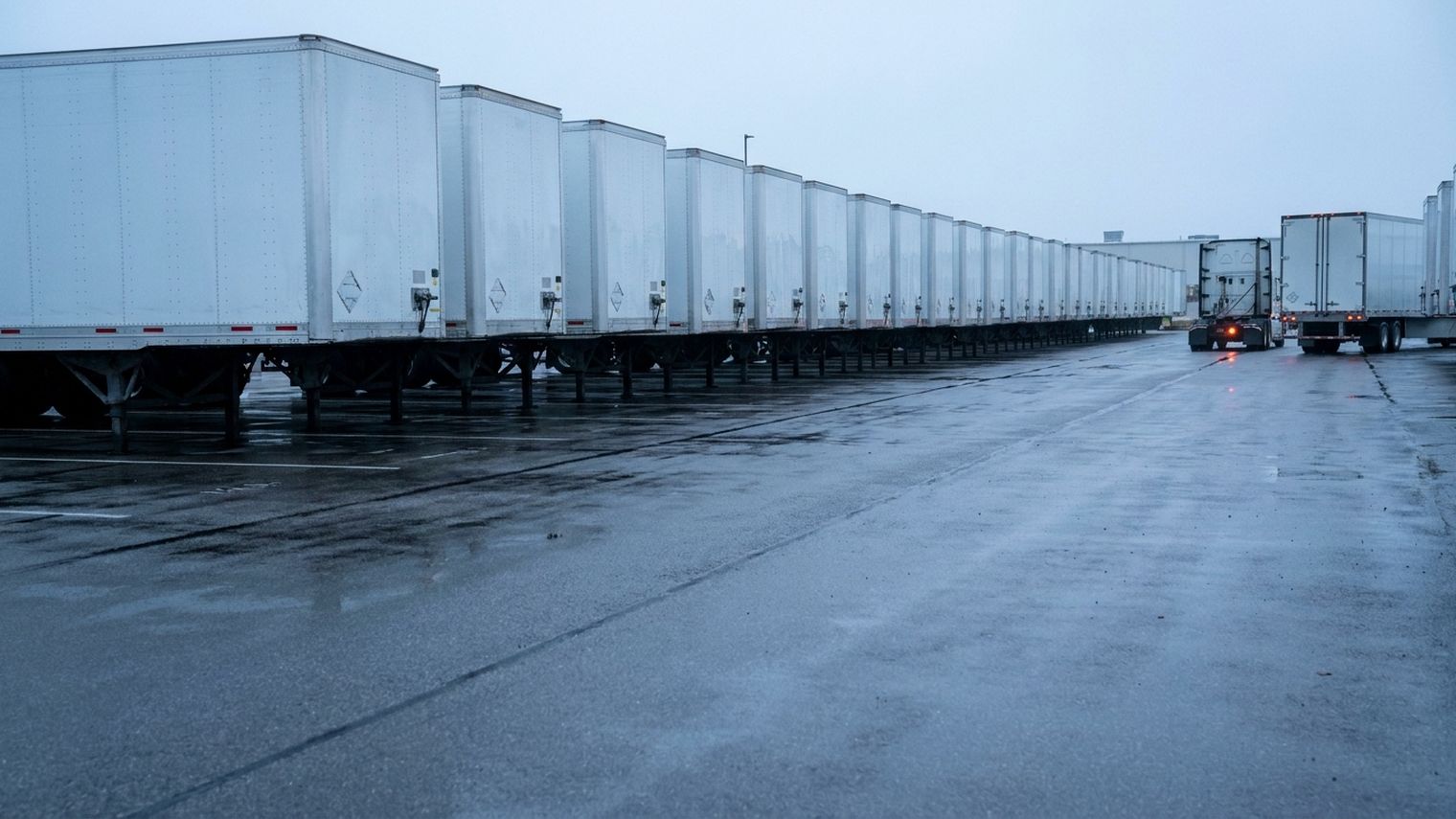
WASHINGTON — The Commerce Department issued preliminary antidumping determinations on July 30 covering van-type trailers from Canada and Mexico, and the two numbers could hardly be further apart. Mexican producers drew preliminary margins ranging from 3.21% to 79.92%. Canadian producers drew 4.29%.
That gap is the whole story for anyone speccing dry vans or reefers this year. The case began in November 2025, when the American Trailer Manufacturers Coalition — Great Dane, Stoughton Trailers and Wabash — filed antidumping and countervailing petitions against Canada, Mexico and China. The petition asked for margins of 223.13% to 297.26% on Canadian trailers. Commerce came back with a number less than a fiftieth of that. The coalition still called the determinations a win, and on the Mexican side it clearly is.
These are preliminary findings, not final ones. But they carry immediate weight: once the determinations publish in the Federal Register, U.S. Customs and Border Protection starts collecting cash deposits at those rates on covered imports. The cost shows up in trailer quotes before anyone rules on the merits.
How the Canadian rate got so small
Commerce named Manac as the sole Canadian mandatory respondent with an individually calculated margin, and used that calculation to set the 4.29% "all others" rate that now covers cooperating Canadian exporters including ITD Industries and Morgan Canada. Two companies that never answered Commerce's quantity-and-value questionnaire — Collins Manufacturing Company and Gincor Werx — were hit with 44.86% based on adverse facts available, which is the standard penalty for non-participation rather than a finding about their pricing.
Canada also escaped the subsidy half of the case entirely. The coalition withdrew its countervailing allegations in late May and Commerce terminated that investigation, so Canadian builders now face only the antidumping track. Mexican builders face both. That asymmetry matters more than the headline percentages: a Mexican trailer can carry an antidumping rate plus a countervailing rate stacked on top of it, while a Canadian one carries a single modest rate.
One name is conspicuously missing from the Canadian rate table. Commerce moved Vanguard Trailer's exports into the separate China proceeding after determining they were assembled from Chinese-origin subassemblies. That reasoning is the part fleets should read closely.
Mexico is where nearly all the volume sits
Canada's low rate is good news for Canadian plants, but it barely moves the market, because Canada was never the import channel. Trade data cited during the investigation put combined dry van and refrigerated trailer imports at 72,333 units in 2023, of which 71,657 came from Mexico. In 2024 the totals fell to 48,751 units with 47,441 from Mexico. Through the first half of 2025, 21,082 units with 20,060 from Mexico.
So roughly 95 to 99 percent of imported van trailers in every one of those periods came from the country that just drew rates up to 79.92%. The 4.29% Canadian rate applies to a sliver.
Note what those numbers already show: imports fell by about a third between 2023 and 2024 and stayed soft into 2025, well before any duty existed. Duties are landing on an import stream that was already shrinking alongside weak freight demand, so the near-term effect is less about volume displacement and more about price floors under the trailers that do get built.
The scope covers subassemblies, not just finished trailers
The formal scope of these investigations is "van-type trailers and subassemblies thereof." That second half is easy to skim past and it is the piece with the longest reach for parts buyers.
The Vanguard decision shows how Commerce is applying it. Trailers physically assembled in Canada were pulled into the China case because the subassemblies feeding them originated in China. Alongside that, the department confirmed it will keep applying Chinese antidumping and countervailing duties — the China countervailing rates alone ran from 82.3% to 128.7% in the June preliminary determination — to Chinese-origin trailers and subassemblies routed to the U.S. through Canada.
For a fleet, the practical read is that country of final assembly no longer settles the duty question on a trailer or on a major structural component. Where the subassembly was made can override where the trailer was welded. If you buy sidewall panels, roof bows, floor assemblies or door hardware through a distributor who does not track origin below the top-level part number, that is now a pricing exposure rather than a paperwork detail.
What changes for fleets buying this year
Three things are worth acting on now.
First, quotes on Mexican-built dry vans and reefers should be treated as unstable until the final determinations land later this year. A preliminary rate can move either way at final, and cash-deposit obligations attach to entries made while it is in effect. If a builder is holding a price, get the duty treatment written into the order rather than assumed.
Second, the Canadian result reopens a sourcing lane that looked closed six months ago. At 4.29% with the subsidy case dead, a Canadian trailer is now a genuinely competitive alternative to a Mexican one on landed cost — a reversal worth re-running the math on before the next order cycle.
Third, on the aftermarket side, expect replacement structural components for van trailers to firm up rather than fall, and expect origin questions to get harder to answer at the counter. Fleets that repair rather than replace will feel this in body panel and door hardware pricing before they feel it in new-trailer capital. Cross-checking equivalents across brands by part number is a reasonable hedge when a single-sourced OEM component starts moving on trade policy rather than on steel.
"These preliminary determinations represent another meaningful step toward restoring fair competition in the U.S. trailer market," said Robert E. DeFrancesco, trade counsel to the coalition and a partner at Wiley. The coalition says the domestic trailer industry supports roughly 10,000 direct U.S. jobs and about 50,000 indirect ones. Commerce is expected to issue final antidumping determinations later in 2026, with the final countervailing determination on Mexican trailers due in December.

Find the right part for your truck
Tell PartsNow AI the truck and the job. It checks fitment, finds OEM cross-references and pulls live pricing from the catalog.
PartsNow Newsroom
Parts news, straight to your inbox
Product updates, catalog additions and new cross-references. Unsubscribe anytime.