
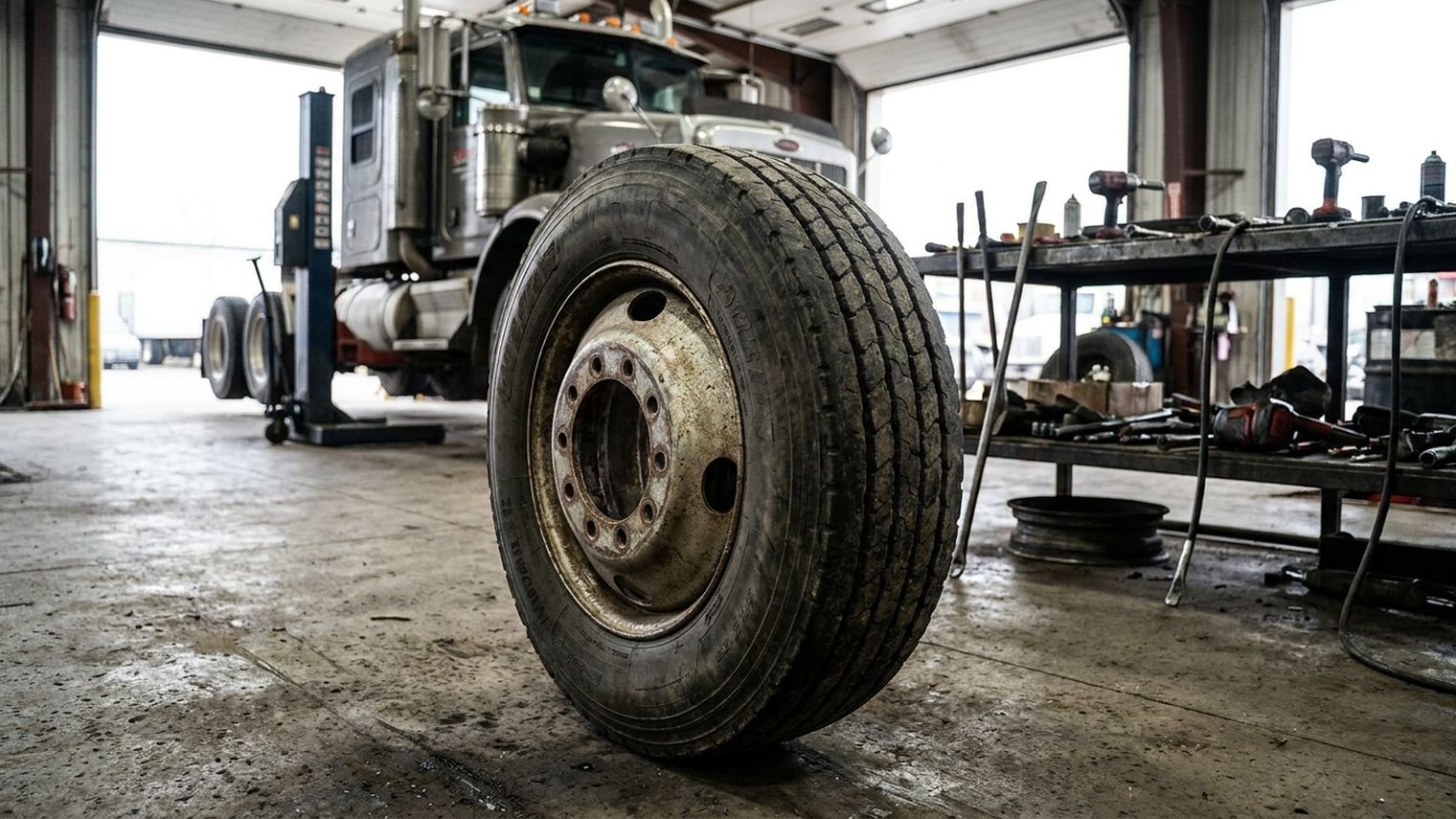
WASHINGTON — The federal government is reopening the rulebook behind the tires on every Class 8 truck in the country, and two of the three compliance tests it wants to re-examine are ones trucking's own maintenance body already calls obsolete.
NHTSA said Oct. 26 it intends to form a negotiated rulemaking committee on tire safety, publishing its notice of intent in the Federal Register the next day. Nothing changes yet: the committee has up to two years to reach consensus, and a proposed rule only follows after that. What has a deadline is the record. Comments and committee nominations close Nov. 27.
The three tests, and why No. 119 is the one to watch
The notice puts three tests up for review — tire strength (plunger energy), bead unseating resistance and tire endurance (chunking) — all of which sit in FMVSS Nos. 109, 119 and 139. For heavy-duty fleets the one that matters is No. 119, the standard governing new pneumatic tires on vehicles above 10,000 pounds GVWR. That is the compliance floor under the truck and bus tires fleets actually buy.
Robert Braswell, executive director of the American Trucking Associations' Technology & Maintenance Council, told Transport Topics that removing the bead unseat and plunger energy tests is likely the most relevant piece for commercial trucking, noting they date to when bias-ply tires were common. “Some of these tests are really kind of a legacy,” he said. “They're vestigial.”
NHTSA ran an advance notice on the same tests in December 2019, but the move is being read as the first serious reworking of the federal tire standards in two decades.
Load ranges, sidewall markings and airless tires
Two items reach past the test lab. The Tire and Rim Association has petitioned to bring Load Range F light truck tires into FMVSS No. 139, which they currently fall outside — a live question for anyone speccing medium-duty and service trucks. NHTSA also cites a Goodyear interpretation request on “Extra Load” passenger tires rated to 350 kPa as evidence that load classification rules sit awkwardly against modern designs.
A separate rulemaking is planned on sidewall labeling itself, including the rules requiring that tubeless tires be marked “tubeless,” radial tires “radial,” and ply count appear in sidewall and tread. Those markings are how a tech identifies a tire at the wheel, so changes there land in the bay.
Airless tires are on the agenda too. Kevin Grove, the ATA's director of safety and technology policy, said he has seen them only on forklifts, and wants “a lot more data on non-pneumatic performance and reliability” before commercial vehicles take them on.
What fleets should do before Nov. 27
Nothing to reorder and no spec to change yet. But a negotiated committee runs on the data its members bring, and the proposed makeup reserves four seats for tire manufacturers or retailers and two for vehicle manufacturers, with none set aside for fleets. Braswell expects trucking represented only indirectly, through standard-setting associations and the big tire makers. A fleet that wants truck-tire reality in the term sheet has one route: the docket.
Three things this month. Pull your tire failure history and sort it by mode — bead seating failures, tread chunking, sidewall and casing damage by wheel position — because that is the evidence the committee weighs; if you are not logging failures that way, symptom-based diagnostic guides are a workable place to standardize the categories. Second, confirm the load ranges specified for your medium-duty and service trucks, since the Load Range F petition is the one item that could change what is legal to fit — check what a given chassis actually calls for before the next tire order. Third, file: comments go to Docket No. NHTSA-2026-1717 on regulations.gov by Nov. 27, nominations to tiresfac@dot.gov by 5 p.m. ET the same day.

Encuentra la pieza correcta para tu camión
Dile a PartsNow AI el camión y el trabajo. Comprueba la compatibilidad, busca referencias cruzadas OEM y saca el precio actual del catálogo.
Sala de prensa PartsNow
Noticias de piezas, directo a tu bandeja
Actualizaciones de producto, altas de catálogo y nuevas referencias cruzadas. Cancela cuando quieras.