
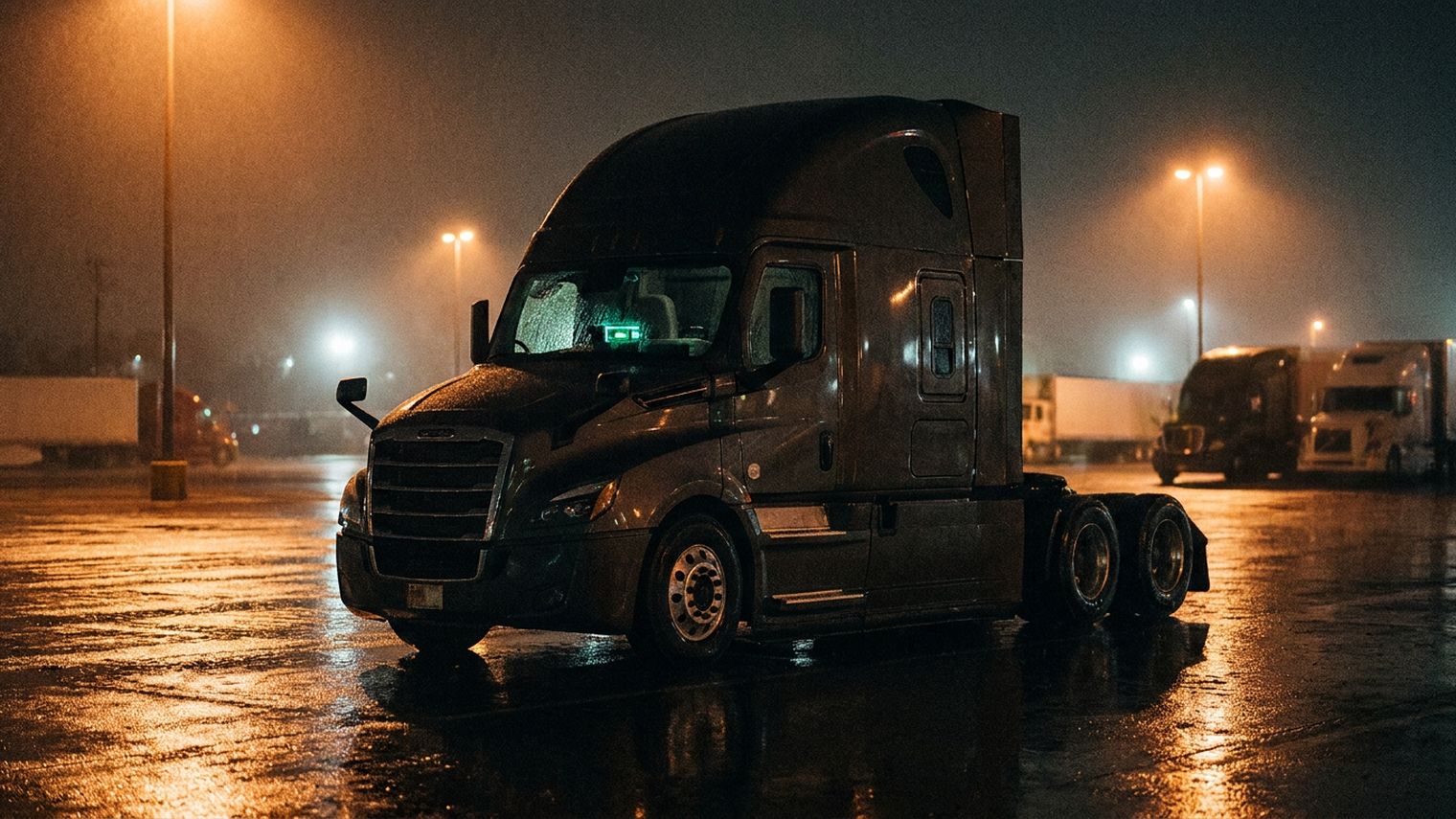
Volvo Trucks North America turned on unattended over-the-air software updates across the United States and Canada on Sept. 10, completing a rollout it announced in June. A driver can start an update from the dash, lock the truck and walk away — through a 30-minute break or an overnight shutdown — and come back to a truck running new code.
Mack is close behind. The sister brand said in July that its Lock & Leave feature will reach the Pioneer, Anthem, the all-new Granite and the Keystone this fall, after final validation, with no laptop, dongle or dealer visit required.
What actually went live
The capability rides on Volvo's Remote Programming system, which has pushed software and parameter changes over cellular since 2018, and on the 24-volt electrical architecture in the new VNL and VNR. Volvo counts more than 220,000 connected trucks in North America and says its systems can dispatch up to 20,000 updates a day; more than 7,500 were completed in August alone.
What moves over the air is engine performance, transmission behavior and battery management — calibration and control code. That is a meaningful list, because those are exactly the systems behind derates, shift complaints and no-start calls that used to book a bay.
The downtime math, and its limits
The share of Volvo's connected trucks running current software climbed from 25% to more than 80% in six months. Volvo says those trucks show 24% fewer unplanned stops, and that over-the-air updates together with remote diagnostics and predictive service have avoided more than 100,000 days of unplanned downtime and roughly $60 million in cost. Mack reports more than 50,000 remote updates over the past 12 months at a 99.99% success rate.
"Drivers can start the update, finish their day, and let the truck take care of the rest," Mack Trucks North America President Jonathan Randall said. Read the numbers for what they are: OEM figures, measured fleet-wide, counting avoided stops rather than parts spend. They say software is getting to trucks faster. They do not say components last longer.
Where the software stops
A pushed update fixes calibration, not wear. Injectors, DEF pumps, NOx sensors, wiring harnesses and aftertreatment hardware fail on the same curve they did before, and any recall with a hardware remedy still needs a bay and a part.
Eligibility is also narrower than the headline suggests. The feature needs factory-installed connectivity and the 24-volt platform, so a mixed fleet running older VNLs and VNRs, Mack Pinnacles or other makes sees no change at all. The new risk runs the other way: a shop replacing a sensor on a late-model truck whose complaint a pending update already addresses, and eating the part twice.
What fleets should check this week
Start with an inventory, not an assumption. Pull the connected-truck list and confirm which units are genuinely on the 24-volt architecture — it is worth checking the model-year specs and parts fitment for the VNL, VNR and Mack models involved before you promise a shop manager anything.
Then change one step in the write-up process. On a late-model Volvo or Mack showing a derate, an intermittent fault code or an aftertreatment complaint, ask whether a pending update covers it before a part is authorized; working the symptom back to a failure mode first is cheaper than a return. When the fix really is hardware and the dealer quotes a lead time on the OEM number, run that number through an interchange lookup rather than waiting on one supplier.
For everything older and unconnected, nothing has changed. PM intervals, wear-part budgets and stocking levels on those units should be planned exactly as they were last month.

Find the right part for your truck
Tell PartsNow AI the truck and the job. It checks fitment, finds OEM cross-references and pulls live pricing from the catalog.
PartsNow Newsroom
Parts news, straight to your inbox
Product updates, catalog additions and new cross-references. Unsubscribe anytime.