
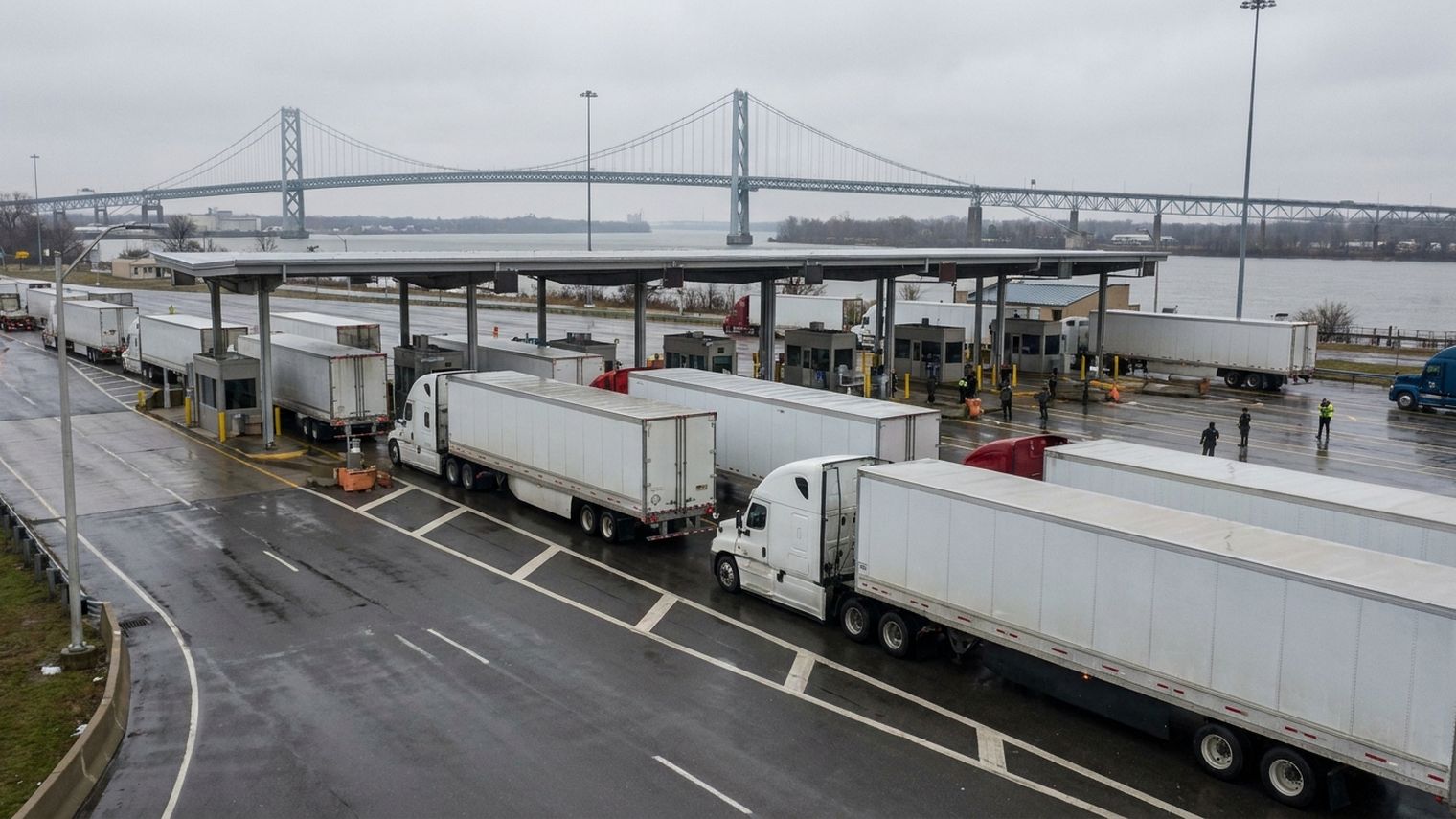
WASHINGTON — The U.S.-Canada trade deal that was all but finished on Aug. 21 collapsed over one category of equipment: medium- and heavy-duty vehicles. Negotiators had the outline of an agreement that would have cut the U.S. sectoral auto tariff to 15% from 25%. Canada pushed on a late call to extend that relief to larger trucks. Washington balked, and the deal died.
Three days later the dispute escalated past anything that had been on the table. President Donald Trump posted on Aug. 24 that tariffs on “all Cars, Trucks, both large and small, Automotive Parts, and Steel” from Canada would rise to 50%, effective Jan. 1. Whether the measure is enacted, and how it would treat the existing carve-out for U.S. content, both remain unclear.
Why trucks were the deal breaker
Both countries had agreed in principle to lower sectoral tariffs on autos, steel, aluminum and lumber. The break came over how medium- and heavy-duty vehicles would be classified. Canada insisted the reduced rate cover them; the U.S. treated that as a new demand outside the deal, people familiar with the negotiations told Bloomberg.
Canadian Prime Minister Mark Carney said Aug. 22 that denying relief to trucks “is a big change, obviously,” noting that Ford’s new Ontario plant, which builds F-350s and larger pickups, would have been excluded. Flavio Volpe, president of the Automotive Parts Manufacturers’ Association, told the CBC that at the last minute the Americans “pulled that classification out of the class of product that would get a reduced tariff.”
The collapse triggered 50% U.S. tariffs on roughly $20 billion of Canadian goods.
The headline rate is not the rate anyone pays
Today’s 25% auto tariff applies only to non-U.S. content, so the duty on a Canadian-assembled vehicle lands near half the headline number, because those vehicles are typically about half U.S.-made. Whether that carve-out survives at 50% has not been spelled out — and that unanswered question is the whole difference between a cost increase you can quote and one you cannot. Imported steel already carries 50%, which is priced into anything fabricated from it.
Canada answers first. Ottawa matched U.S. rates across more than 700 products at 15%, 25% and 50% effective Sept. 8, with steel and aluminum the largest share, alongside a C$7.5 billion support package. Existing Canadian counter-tariffs on U.S. autos stay in place.
What to pin down before January
Jan. 1 is four months out, and the date is itself negotiating runway — Canadian officials see little chance of talks resuming before the U.S. midterms. That argues against buying the shelf bare in September, and for knowing precisely where the exposure sits.
Start with origin, not price. Ask suppliers for country of origin and HTS classification on your highest-turn SKUs, then flag the ones that trace back to a single Canadian source. Those are the line items where a January rate change arrives with no alternative behind it. For each one, run the OEM number through a free interchange lookup to see whether an equivalent part exists outside the affected lane. A cross-reference you find in September is a purchase order in December rather than a downed truck in January.
If the threat pushes you to pull truck orders forward, remember that stocking ahead only pays when the parts overlap. Before committing, check which model years share the same components across the makes you actually run, so one shelf of filters, brake and electrical parts covers more of the fleet instead of fragmenting it further.

Find the right part for your truck
Tell PartsNow AI the truck and the job. It checks fitment, finds OEM cross-references and pulls live pricing from the catalog.
PartsNow Newsroom
Parts news, straight to your inbox
Product updates, catalog additions and new cross-references. Unsubscribe anytime.