
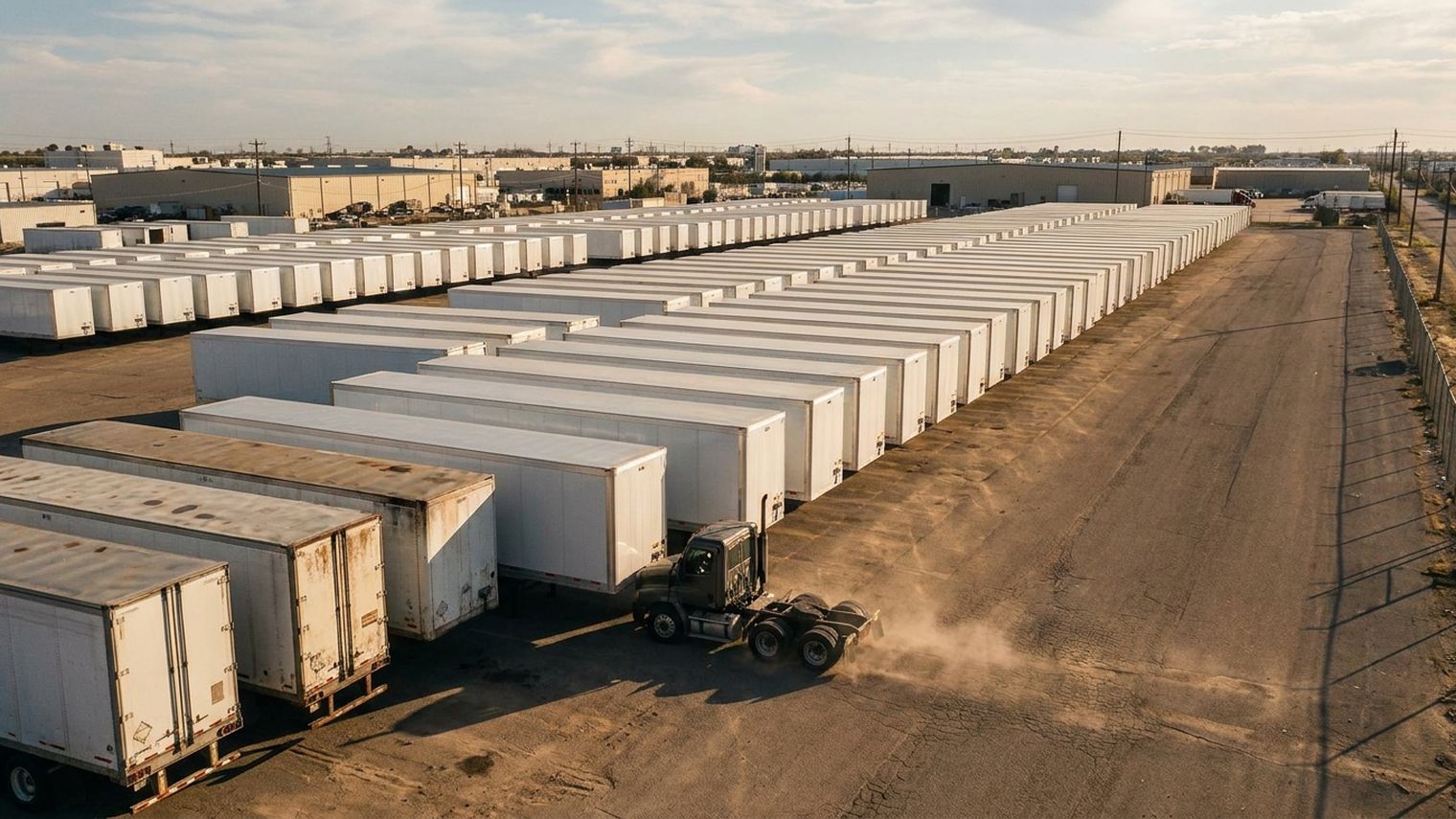
US trailers are being ordered far faster than they are being built. Fleets placed 16,862 net trailer orders in July, up 22% from June and 130% from a year earlier, according to FTR's preliminary count — 23% above the 13,665-unit average for the month over the past decade. ACT Research, working from a different survey, put preliminary July net orders at 15,900 units, up 97% year over year.
In the same month, trailer plants shipped 16,195 units, down 11% from June and 9% from July 2025. Year to date, output stands at 113,969 trailers, 1% below last year. Orders are climbing into a build rate that is falling.
Most of the surge is a pull-forward
July is normally the softest month of the trailer order year. "Typically, July is the weakest net order month of the annual ordering cycle, as fleets have made their decisions for current-year needs and OEMs start to build down the backlog," said Jennifer McNealy, ACT Research's director of commercial vehicle market research. This July broke the pattern.
Why it broke matters more than the number. ACT's customer survey put the strength down to three things: buyers ordering ahead of tariff-related price increases, healthier long-term business conditions, and pent-up replacement demand. FTR senior analyst Dan Moyer named the same cost pressure, citing April's changes to how Section 232 tariffs on steel and aluminum are applied alongside the antidumping and countervailing duty cases on van equipment sourced from Mexico, Canada and China. His read on demand stayed cautious: trailer buying is more replacement-driven than expansionary, he said.
A falling build rate stretches every delivery
Orders up and production down is the combination that lengthens order-to-delivery time. A fleet that signed in July is queuing behind everyone else who moved early on the same tariff math, and with output running below last year's pace, the trailers those new units were meant to retire stay in the yard and keep working.
That is where the cost actually lands. The order is a 2027 problem; the trailers still rolling are a this-quarter problem. Wheel ends, brake linings and drums, air springs and shocks, ABS sensors, lighting harnesses, landing gear and upper coupler wear all keep accruing on equipment that was supposed to be off the books by now. And the same steel and aluminum duties pushing new trailer prices up feed into what those replacement components cost.
What to check before that trailer runs another season
Pull the units you had slated for trade in the next 12 months and re-inspect them as keepers rather than trade-ins. The recurring spend on a trailer that stays past its replacement date is predictable: S-cam brake hardware and slack adjusters, wheel seals and bearings, air springs and shocks across the slider, seven-way sockets and corroded harness grounds, and kingpin and upper coupler wear that only shows on a proper inspection.
Then budget for components rather than equipment. Order the wear items you know those units will need before the next quote cycle rather than after it. Where an OEM trailer number comes back quoted long or priced high, check the interchange on that part number before accepting the lead time — trailer brake, suspension and lighting components cross broadly between builders, and a superseded number is often the whole delay. And when a unit is showing a symptom rather than a due date, such as a dragging brake, a leaning slider or a light circuit that keeps blowing, work the failure mode before you order the part, because replacing the wrong component on an aging trailer is the most expensive way to buy time.

Find the right part for your truck
Tell PartsNow AI the truck and the job. It checks fitment, finds OEM cross-references and pulls live pricing from the catalog.
PartsNow Newsroom
Parts news, straight to your inbox
Product updates, catalog additions and new cross-references. Unsubscribe anytime.