
The public comment window on the EPA's proposed rewrite of the model year 2027 heavy-duty emissions rules closed Aug. 29 with more than 13,500 filings, and the argument that drew them was not about NOx limits. Those hold. It was about who pays when an aftertreatment system fails.
The proposal, issued July 9 and published in the Federal Register five days later under docket EPA-HQ-OAR-2026-0728, would keep the emissions-related warranty on MY2027 and later engines at 100,000 miles or five years — the terms that apply to MY2026 — instead of raising it to 450,000 miles or 10 years as the 2023 rule required.
What the proposal keeps and what it drops
EPA's own fact sheet on the proposed amendments puts the savings at up to $12 billion for the industry and up to $6,000 per new truck, and says the package still retains nearly 90% of the NOx reductions from the 2023 rule. The 35 mg/hp-hr NOx standard for 2027 is untouched.
Three things move. The emissions warranty reverts to 100,000 miles. Regulatory useful life stays at 435,000 miles until MY2030 rather than jumping to 650,000 miles at MY2027. And derates tied to DEF system faults come off newly built engines entirely, replaced by audible and visible warnings — a 90-second alert when a refill is due — instead of the speed cut that has been stranding trucks. EPA also proposed nonconformance penalties from MY2027, up to $6,800 per heavy heavy-duty engine.
The warranty line is really a parts budget line
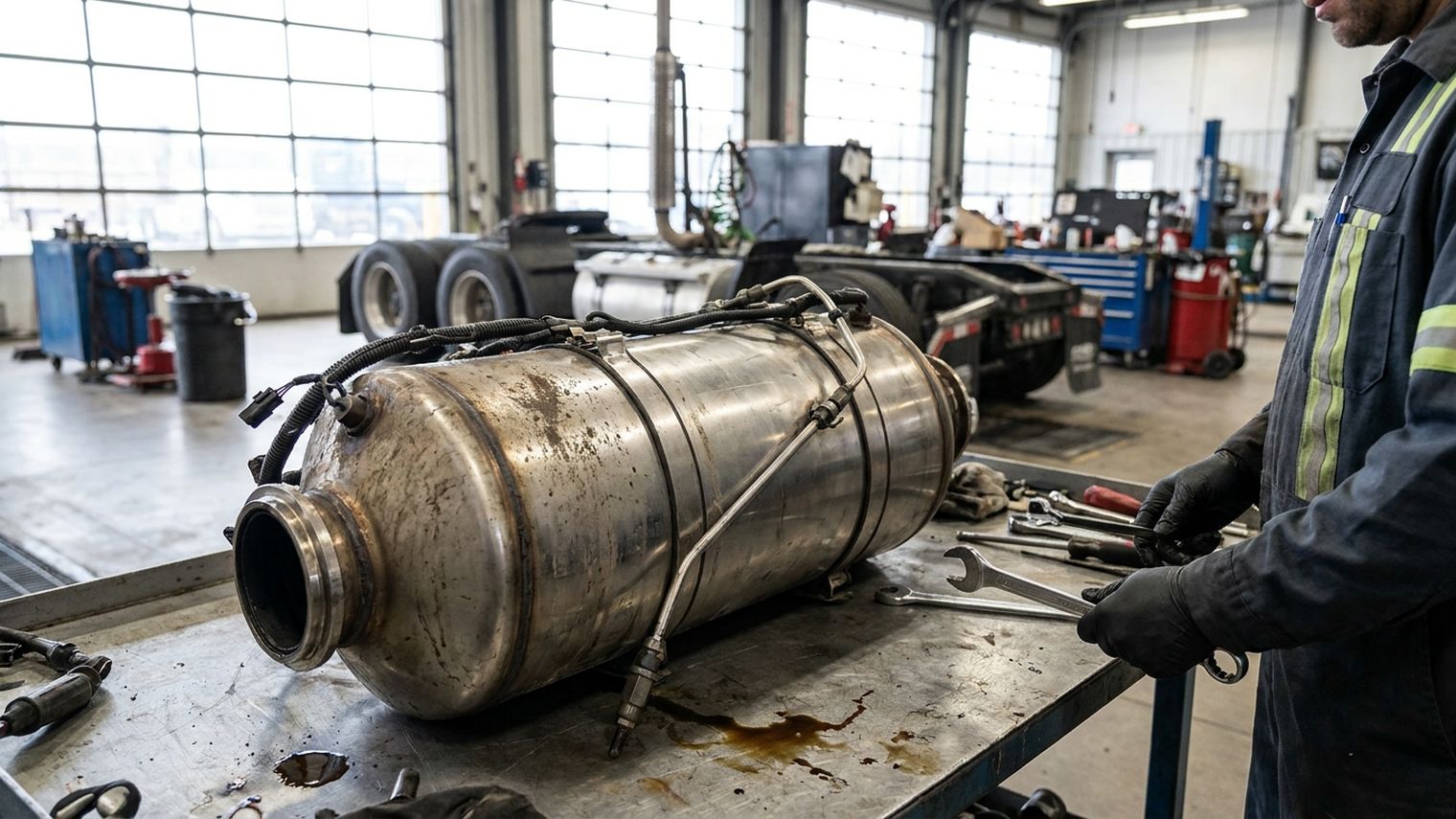
For anyone running the truck, the number that matters is 100,000 against 450,000. Under the 2023 rule, the expensive contents of the aftertreatment system — diesel particulate filter, SCR catalyst, oxidation catalyst, DEF pump and doser, NOx sensors, DEF tank header — would have been the manufacturer's problem through most of a first life. Under the proposal they become the owner's problem somewhere in year two.
That lands harder on 2027 because the hardware is new. Detroit's Gen 6, the 2027 Cummins X15, Volvo's updated D13 and International's S13 all arrive with revised aftertreatment and no field failure history to budget against. When a clogged DPF or a failing doser starts throwing codes, that repair now lands on a truck that is out of emissions coverage but nowhere near the end of its working life.
Where the industry split
The manufacturing side wants it done. Transport Topics reported EPA Administrator Lee Zeldin framing the change around what manufacturers, suppliers, fleets and dealers had asked for, with the warranty terms expected to cut roughly half of a projected $20,000 per-truck price increase. The Truck and Engine Manufacturers Association pressed EPA to finalize by year end for planning certainty, and ATA welcomed the end of DEF derates.
Owner-operators did not line up the same way. OOIDA called the shorter warranty a cost-cutting measure that falls hardest on small carriers, and on the useful life delay told the agency that "OEMs can sit back and see if their engines perform while truckers will be left on the side of the road." The group did back the audible DEF warning.
What to check before you spec a 2027
Nothing is final — the rule is at OMB and MY2027 production starts in months. But the planning move is the same whichever way it lands: price the aftertreatment as an operating expense from 100,000 miles rather than a warranty item, and get the OEM's written list of emissions-related covered components before you sign, because coverage follows that list and not the whole exhaust system.
If you are quoting extended emissions coverage, quote it against real part prices instead of a percentage. Aftertreatment part numbers shift between 2026 and 2027 builds, so check the specs and fitment for the model year you are actually ordering rather than assuming carryover, and run the OEM number through an interchange lookup before accepting a dealer quote on a DPF or an SCR catalyst. On trucks already outside coverage, that comparison is the entire margin.

Find the right part for your truck
Tell PartsNow AI the truck and the job. It checks fitment, finds OEM cross-references and pulls live pricing from the catalog.
PartsNow Newsroom
Parts news, straight to your inbox
Product updates, catalog additions and new cross-references. Unsubscribe anytime.